
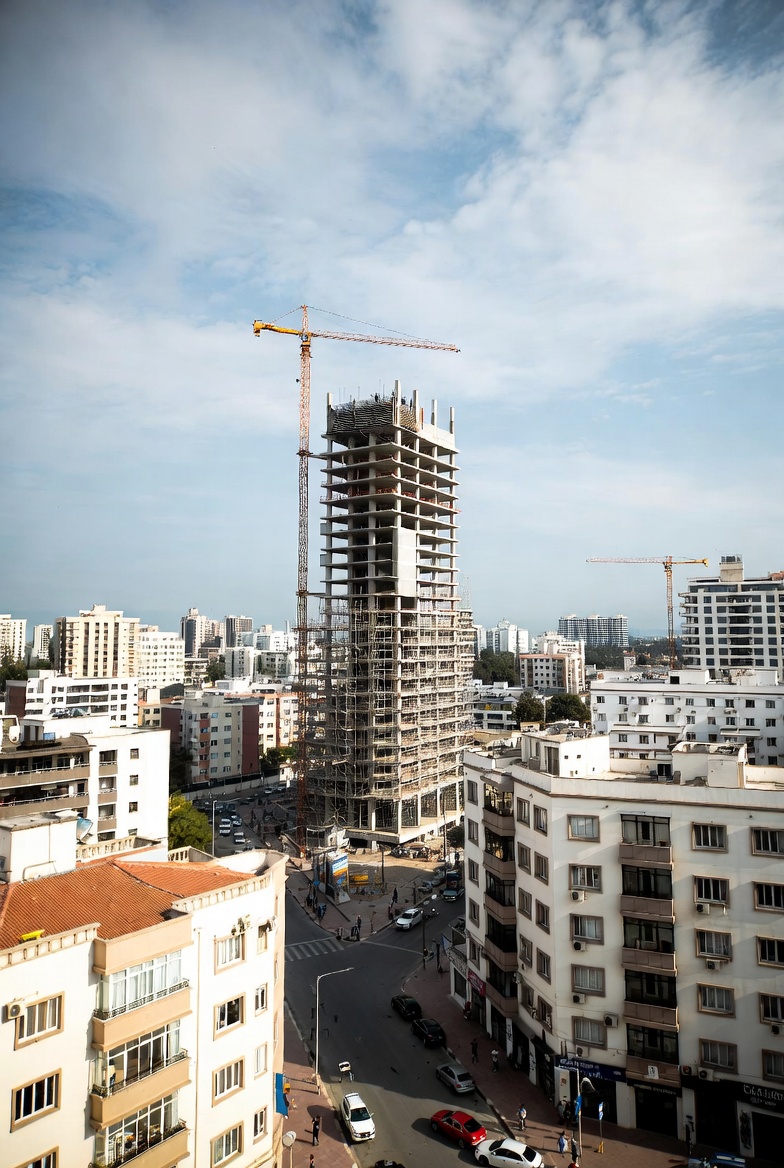
High Court Fixes April 15, 2026 for Final Hearing in PIL Challenging FAR and Height Relaxations Across Goa
The Bombay High Court at Goa today fixed April 15, 2026 for final hearing and disposal of the Public Interest Litigation filed by the Goa Foundation and two other petitioners challenging sweeping amendments to Goa’s Building Regulations that permit unprecedented increases in Floor Area Ratio (FAR) and building height across the State.
The PIL contends that the recent amendments effectively allow the Government to grant additional floors and height relaxations to individual applicants anywhere in Goa — including village panchayat areas and ODP regions — upon payment of ₹1,000 per square metre, without following the statutory discipline governing zoning and development intensity under the Goa Land Development and Building Construction Regulations (GLDBCR), 2010 and the Regional Plan 2021.
Plot-by-Plot Intensification of Development
According to the Petitioners, the amended Regulation 6.1.1(a)(2) allows applicants to seek enhancement of FAR and corresponding height relaxations on a case-by-case basis. The PIL argues that this creates a system of plot-by-plot intensification of development, detached from the zoning structure that is meant to guide planned growth.
Under Section 6A.4 of the GLDBCR, maximum permissible FAR and height are determined by zone classification. Land use and FAR together form the backbone of planned urban and rural development. Permitting development intensity equivalent to higher commercial zones in lower-intensity settlement or residential zones fundamentally alters the character of those areas.
For instance, allowing FAR 200 and 24-metre height in zones otherwise capped at FAR 60 and 9 metres substantially increases density and built form beyond what the zoning framework envisages.
Under Note (1) of Table VIII of the Regulations, C-1 zoning is intended for central business districts of Panaji, Margao, Mormugao, Mapusa and Ponda. The Petition states that over 100 permissions under Regulation 6.1.1(a)(2) have granted C-1 equivalent FAR and heights in non-CBD areas, including village panchayat jurisdictions.
The PIL argues that although described as “relaxations,” such permissions operate in substance as changes in development intensity comparable to zone changes, but without following the statutory procedure required for modification of zoning classifications.
Environmental and Infrastructure Concerns
The Petition also raises concerns that such large-scale increases in FAR and height are being granted without comprehensive studies on:
- Infrastructure capacity (water, sewage, roads),
- Traffic impact,
- Environmental and social consequences,
- Cumulative impact on small settlements and village areas.
Planned development under the 2008 Act requires balancing growth with carrying capacity and public interest. The Petition argues that unstructured intensification risks undermining that balance.
Transparency and Public Participation
The PIL further notes that 739 permissions/NOCs had reportedly been granted up to January 2025 under the amended regime. However, details of these approvals have not been systematically placed in the public domain.
The Petition contends that non-disclosure limits transparency and curtails the public’s ability to participate meaningfully in planning governance.
Constitutional Questions Raised
The Petition challenges the amendments on the grounds that:
- Removal of quantitative ceilings on FAR through corrigendum violates the mandatory procedure under the 2008 Act;
- Grant of unrestricted discretionary powers to enhance FAR and height without structured criteria raises issues under Article 14 of the Constitution;
- Differential premium structures for similar categories of development lack rational basis.
The matter now stands posted for final hearing on April 15, 2026.
Related Proceedings
In a separate writ petition filed by Ms. Sabina Martins challenging FAR enhancement granted in respect of development in her building, the High Court today observed that the development would remain subject to the final outcome of her writ petition.